Introduction
When most people think of an elkhound they picture the gray Norwegian Elkhound, a Viking‑era spitz breed with curled tail and wolfish looks. Few realize there is a second, rarer variety: the Black Norwegian Elkhound. This striking dog shares a lineage with its gray cousin but developed as its own strain in the 19th century. Although recognized by the Norwegian Kennel Club in 1877, the black elkhound remains uncommon outside Scandinavia. Despite its rarity, it offers everything dog lovers admire in spitz breeds—independence, intelligence, courage and loyalty—along with a sleek black coat that turns heads on every walk. If you’re considering a unique companion for hunting, hiking or family life, the Black Norwegian Elkhound deserves your attention.
Origins and history
To understand the black elkhound you need to appreciate the long partnership between Northern European people and spitz dogs. Archaeological evidence suggests ancestors of the elkhound were working with humans as far back as 4000‑5000 B.C., serving as hunters, guards and draft animals in the harsh climate of Scandinavia. These dogs were prized for their keen senses and resilience; Vikings brought them on voyages to help detect game and potential threats. Over centuries the type diversified into regional lines. The familiar gray Norwegian Elkhound emerged as a distinct breed of moose‑hunting dog, while the black strain arose in the 19th century when breeders selectively bred darker-coated elkhounds for specific roles. Some historians suggest the black color may have been desirable for hunting in snowy forests because it contrasted sharply against white backgrounds, making it easier for hunters to spot the dog.
Although recognized by the Norwegian Kennel Club in 1877, the black elkhound never achieved the popularity of its gray cousin. In fact, by the mid‑20th century it was on the verge of disappearing until dedicated breeders revived the strain. Today, it is still relatively rare outside Norway. Breed enthusiasts are working to preserve its unique traits and promote responsible breeding, but you may have difficulty finding a puppy outside Scandinavia.
Physical characteristics
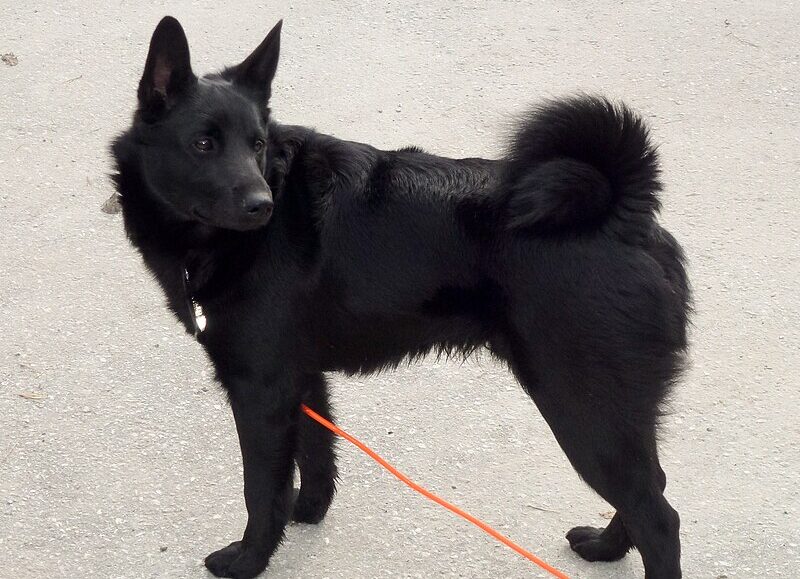
The Black Norwegian Elkhound is a medium‑sized, squarely built spitz with the classic curled tail, prick ears and wedge‑shaped head common to northern breeds. Males typically stand 18–19.5 inches at the shoulder; females are slightly smaller. The most obvious feature is the glossy, jet‑black coat. Unlike the gray elkhound’s salt‑and‑pepper coloring, the black elkhound’s coat is uniformly black from head to tail. The double coat is weather resistant with a dense, soft undercoat and a longer, coarse outer coat that repels moisture and dirt. Twice yearly the breed “blows” its coat, shedding profusely; the rest of the year shedding is moderate and grooming is relatively easy. A weekly brushing and occasional bath keep the coat looking its best.
Other notable features include dark eyes with an alert expression, strong jaws and a curled tail carried high over the back. The breed’s build is compact and muscular, giving it the stamina to work long days in the field. Its feet are round and well‑padded to handle rugged terrain. Overall the black elkhound conveys a sense of athleticism and alertness without being overly heavy or delicate.
Temperament and personality
Though originally bred as a hunting dog, the Black Norwegian Elkhound makes a loyal family companion when its needs are met. This is a dog with a strong prey drive and independent streak, so prospective owners must be prepared to provide consistent training and exercise. Breed descriptions note that black elkhounds are fearless, energetic and intelligent. They tend to be affectionate with their family but reserved with strangers. Socialization from a young age is essential to help them remain confident and well‑mannered.
Owners often describe the breed as dignified and somewhat aloof. You won’t get the constant clinginess of a lap dog, but you will gain a partner who bonds deeply and is always alert to your surroundings. As a natural guardian, the black elkhound is quick to vocalize when something is amiss. This vigilance makes them excellent watchdogs but also means they may bark more than some people expect. Teaching a “quiet” command early on can help manage this trait.
In multi‑dog households they may show dominance or same‑sex aggression if not properly socialized. Historically, breeders preferred to pair dogs of opposite sexes in sled teams because two males might fight. Introducing a black elkhound to other pets should be done slowly and under supervision. Early socialization and obedience training will set the stage for harmony.
Training and exercise
The black elkhound is a thinking dog accustomed to making decisions in the field. That independent nature can come across as stubbornness in training. Success requires patience, positive reinforcement and variety. Short training sessions that emphasize mental stimulation and rewards work best; harsh or repetitive methods may cause the dog to shut down. Many owners find that their elkhound does well in activities like agility, nose work and tracking, which allow them to use their natural abilities.
Daily exercise is non‑negotiable. This breed thrives on vigorous activity and will become bored or destructive if confined too long. Plan on at least an hour of brisk walking or running plus interactive playtime. Off‑leash work in a safely enclosed area is ideal; off‑leash hikes can also be rewarding if you have solid recall. Because of their strong hunting instincts, these dogs may not be reliable off leash around wildlife. Using a long line while training recall can reduce the chance of them chasing game.
Health and lifespan
Like all purebred dogs, the Black Norwegian Elkhound has some health conditions to be aware of. The breed is generally robust with a lifespan of 12–15 years, but may be predisposed to hip dysplasia, progressive retinal atrophy (PRA), hypothyroidism and cysts. Regular veterinary checkups, a balanced diet and proper exercise help keep them healthy. Reputable breeders screen their breeding stock for genetic diseases and can provide health certificates to prospective puppy buyers. As with all northern breeds, keep them at a healthy weight and avoid overheating; their thick coat is suited to cold climates and they may struggle in hot, humid conditions.
Living conditions and care
The black elkhound’s thick coat and energetic nature mean it is happiest in cooler climates with room to roam. While they can adapt to apartment living if given sufficient exercise, they truly thrive in houses with secure yards where they can stretch their legs. They enjoy spending time outdoors but should always have access to shade and fresh water. In warm weather, restrict exercise to cooler times of day and never shave the coat—it insulates against heat as well as cold.
Grooming is straightforward: weekly brushing will remove loose hair and prevent matting, with more frequent brushing during seasonal shedding. Bathing need only be occasional, as the breed’s coat naturally repels dirt. Regular maintenance like nail trimming, ear cleaning and dental care should be part of your routine. Because they can be prone to ear infections, check their ears weekly and consult your veterinarian if you notice redness or odor.
Finding and raising a black elkhound
Due to the breed’s rarity, finding a Black Norwegian Elkhound puppy may take patience. Start by contacting national breed clubs and reputable breeders in Norway or Scandinavia. They may have waiting lists or can connect you with breeders in your region. Avoid purchasing from pet stores or online brokers, as these sources may come from puppy mills and lack proper health checks. Visiting breeders in person allows you to observe the parents’ temperament and living conditions.
When your puppy arrives, focus on socialization and establishing routines. Introduce your elkhound to a wide range of people, animals and environments so they grow into confident adults. Begin obedience training early using positive methods. Provide puzzle toys and scent games to channel their natural curiosity. Most important, commit to meeting their exercise needs; a bored elkhound is a mischievous one. With proper care and training, your black elkhound will develop into a devoted companion and protector.
Conclusion
The Black Norwegian Elkhound is a little‑known gem among spitz breeds. With roots reaching back thousands of years and a revival in the 19th century, this dog combines ancient instincts with modern adaptability. Its sleek black coat, keen senses and confident demeanor make it a striking presence, while its loyalty and intelligence endear it to those who understand its needs. If you’re seeking a hardworking companion for outdoor adventures and a watchful guardian for your home, the Black Norwegian Elkhound may be the perfect fit. Just be ready to devote time to training, socialization and daily exercise, and you’ll be rewarded with a truly unique bond.