Introduction
Bringing home a new puppy is pure joy — until you realize that adorable little fluff ball doesn’t come with built-in potty manners. Don’t worry! Housebreaking (or potty training) is one of the most important and rewarding first lessons you’ll ever teach your dog. With patience, structure, and consistency, your puppy will quickly learn where and when it’s appropriate to “go.”
This guide walks you through every step — from understanding your puppy’s schedule to handling accidents calmly — so you can spend less time cleaning and more time bonding.
1. Understanding Your Puppy’s Potty Needs
Puppies have tiny bladders and developing control, which means frequent bathroom breaks are essential. Most can only hold it for about one hour per month of age — so a 2-month-old puppy can wait around two hours, max.
- 🐾 After waking up
- 🍽️ After eating or drinking
- 🎾 After playtime or excitement
- 🛌 Before bedtime
Pro Tip: The more you anticipate, the fewer accidents happen. Set alarms in the early weeks to remind yourself — structure is your best friend.
2. Choose the Right Potty Spot
Pick one designated outdoor area for potty breaks. This consistency helps your puppy learn faster through scent association. Always take your puppy to the same spot using a consistent cue like “go potty” or “do your business.”
- 🌿 Choose a quiet, distraction-free location.
- 🌦️ Stand still — don’t play or walk until they’ve finished.
- 🍖 Reward immediately after success, not after returning inside.
Pro Tip: Puppies learn by association — so timing is everything. Praise and treat within 2 seconds of the act to reinforce the right behavior.
3. Establish a Consistent Routine
Consistency builds confidence. Create a daily routine around feeding, play, and sleep — and stick to it. Regular timing helps your puppy’s body develop predictable elimination habits.
- 🕐 Take them out every 2–3 hours during the day.
- 🍗 Feed at the same times daily to regulate digestion.
- 🌙 Limit water before bedtime (1–2 hours prior).
Pro Tip: Puppies thrive on predictability. The clearer your schedule, the faster they’ll understand expectations.
4. Crate Training as a Housebreaking Tool
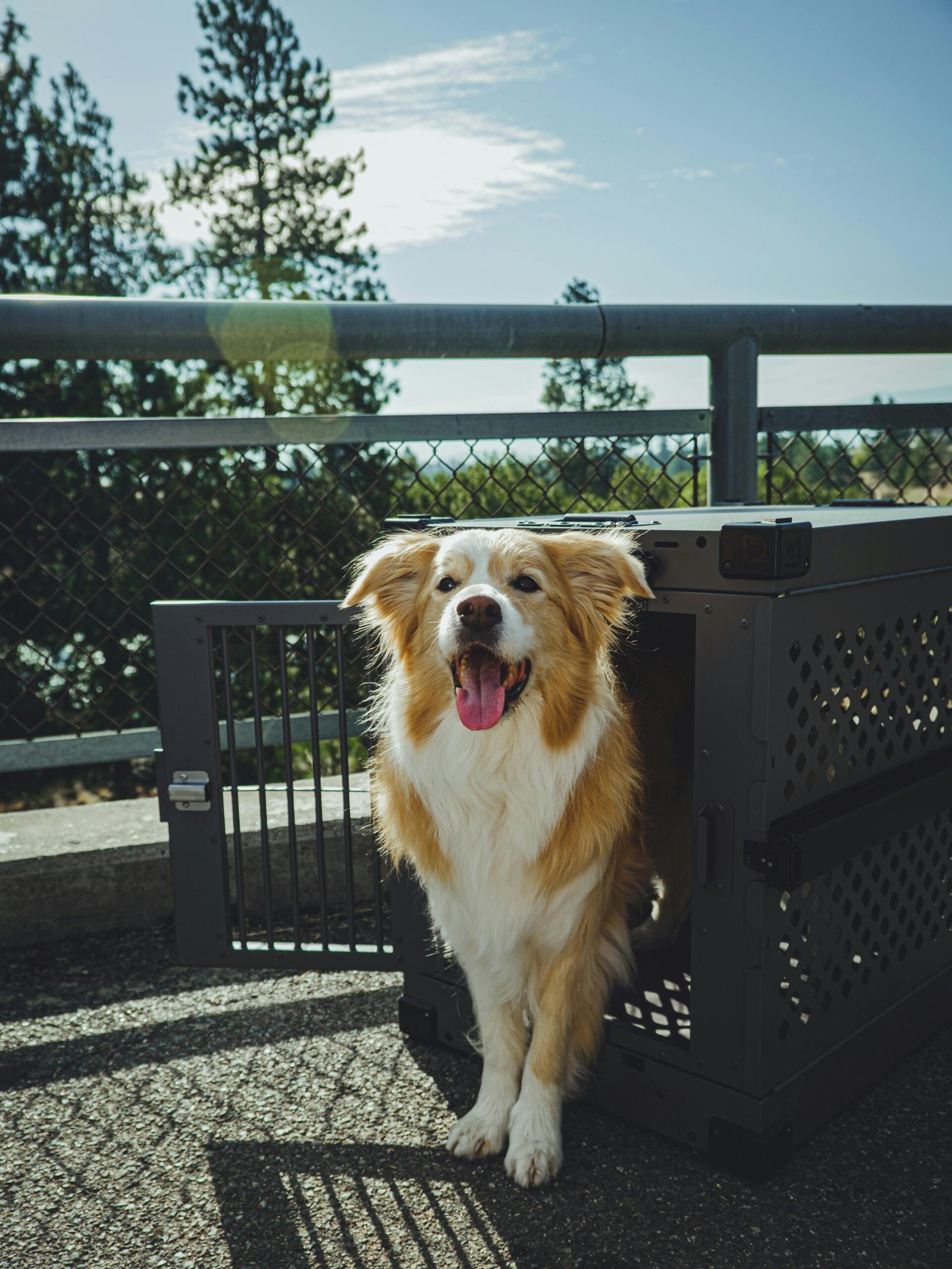
Used correctly, crates are one of the most effective potty-training tools available. Dogs naturally avoid soiling where they sleep, so a crate encourages bladder control and routine.
- 🦴 Choose a crate just big enough for your puppy to stand, turn, and lie down — not large enough for a “bathroom corner.”
- 🕒 Take them out right after waking, eating, or playing in the crate.
- 💤 Crate them at night near your bed to reassure them you’re close.
Pro Tip: Never use the crate for punishment. It should feel like a cozy den — not a timeout zone.
5. Positive Reinforcement Is Everything
Reward-based training teaches your puppy what to do, instead of punishing mistakes. Every successful potty trip should be celebrated!
- 🎉 Give small treats immediately after success.
- 💬 Use consistent praise words like “Yes!” or “Good potty!”
- 🤗 Keep energy happy but calm — too much excitement can cause “happy peeing.”
Pro Tip: Keep treats by the door or in your pocket for easy access. Timing is key to making the connection.
6. Dealing with Accidents Calmly
Accidents happen — it’s part of the learning process. Never punish or scold your puppy for going inside. It only teaches fear and confusion, not understanding. Instead, interrupt gently if caught in the act, take them outside, and reward if they finish there.
- 🧽 Clean up thoroughly with an enzyme cleaner to remove odors.
- 🚫 Avoid ammonia-based products — they smell like urine to dogs.
- 🧘 Stay patient — progress isn’t always linear, and setbacks are normal.
Pro Tip: If accidents happen in the same spot, block access temporarily or keep a closer watch after meals and naps.
7. Nighttime Training
Young puppies can’t last through the night without a potty break. Plan one or two late-night trips during the first few weeks, then gradually phase them out as bladder control improves.
- 🌙 Take them out right before bed and first thing in the morning.
- ⏰ Set an alarm halfway through the night for very young pups.
- 😴 Keep lights low and interaction minimal so they go back to sleep easily.
Pro Tip: Nighttime success improves quickly around 12–16 weeks, as bladder muscles strengthen.
8. Watch for Signs They Need to Go
Learn your puppy’s “I need to potty” cues — they’re subtle at first but become obvious once you know them.
- 🐕 Circling or sniffing the floor
- 🚪 Pacing near the door
- 🦴 Sudden stopping during play
- 🐾 Whining or restless behavior
Catch these moments early and calmly take them outside — you’ll build awareness and trust.
9. When to Expect Full Success
Most puppies take between 4 to 6 months to become fully housebroken, though smaller breeds may take longer. Consistency, supervision, and patience are key — not speed. Remember, every dog learns at their own pace.
- 🐾 Keep up routines until at least one full month without accidents.
- 🔁 Continue rewarding good behavior even after success — reinforcement builds habit.
10. Troubleshooting Common Issues
- 🚫 Puppy goes right after coming inside: Stay outside longer and wait for multiple eliminations if needed.
- 🚫 Frequent accidents despite schedule: Check for possible urinary infections or stress triggers.
- 🚫 Regression after success: Revisit structure — life changes or skipped steps often cause backsliding.
Pro Tip: Keep a “potty journal” for a week — note timing, food, and success rates. Patterns emerge that help fine-tune your schedule.
Conclusion
Housebreaking your puppy is one of the first big milestones in your life together — and a major step toward trust and independence. With clear routines, positive reinforcement, and a little patience, your puppy will learn quickly and confidently. Remember: every successful potty trip is a tiny victory worth celebrating. Stay calm, stay consistent, and soon those early accidents will be just a distant memory (and a funny story to tell).