
Introduction
Every dog owner has faced that moment — you call your pup, and they look at you… then look away. Some dogs are naturally independent or cautious, which can come across as “stubborn.” But behind that resistance is usually a smart, self-confident learner who just needs a different teaching style. With patience, positive methods, and a calm mindset, even the most strong-willed dog can become an eager partner in training.
1. Understanding “Stubbornness” in Dogs
Dogs aren’t truly defiant — they simply act on what works for them. “Stubborn” behavior usually means:
- 🐾 Confusion: They don’t understand what you’re asking.
- 🍖 Low motivation: The reward isn’t worth the effort.
- 😟 Stress or fear: They feel uncertain or overwhelmed.
- 🧠 Independence: Some breeds (like Huskies or Terriers) were bred to think on their own.
Pro Tip: Instead of labeling your dog as stubborn, think like a detective — what’s blocking success?
2. Build a Foundation of Trust
Training starts with the relationship, not the command. A dog that trusts you will listen, even when distracted. Use soft tones, predictable routines, and plenty of playtime to build emotional safety. Dogs respond best when they feel secure and respected.
- ❤️ Keep sessions short and upbeat.
- 🦴 Reward calm attention, not just obedience.
- 🚫 Avoid punishment — it damages confidence and focus.
3. Clarity Over Repetition
Strong-willed dogs tune out repeated commands that sound like background noise. Instead of saying “sit, sit, sit,” say it once — then wait. If they don’t respond, reset the scenario rather than raising your voice. Clear communication teaches your dog that listening the first time pays off.
4. Motivation: Find What Truly Drives Your Dog
Not every dog is food-driven. Some love toys, affection, or verbal praise. Discover your dog’s “currency” by experimenting with different rewards:
- 🍗 Food-motivated pups thrive on soft treats or tiny bits of chicken.
- 🎾 Play-motivated dogs respond to short games of fetch as a reward.
- 💬 Social dogs light up with excited praise or petting.
Pro Tip: Mix up rewards — unpredictability keeps attention high.
5. Work With the Breed, Not Against It
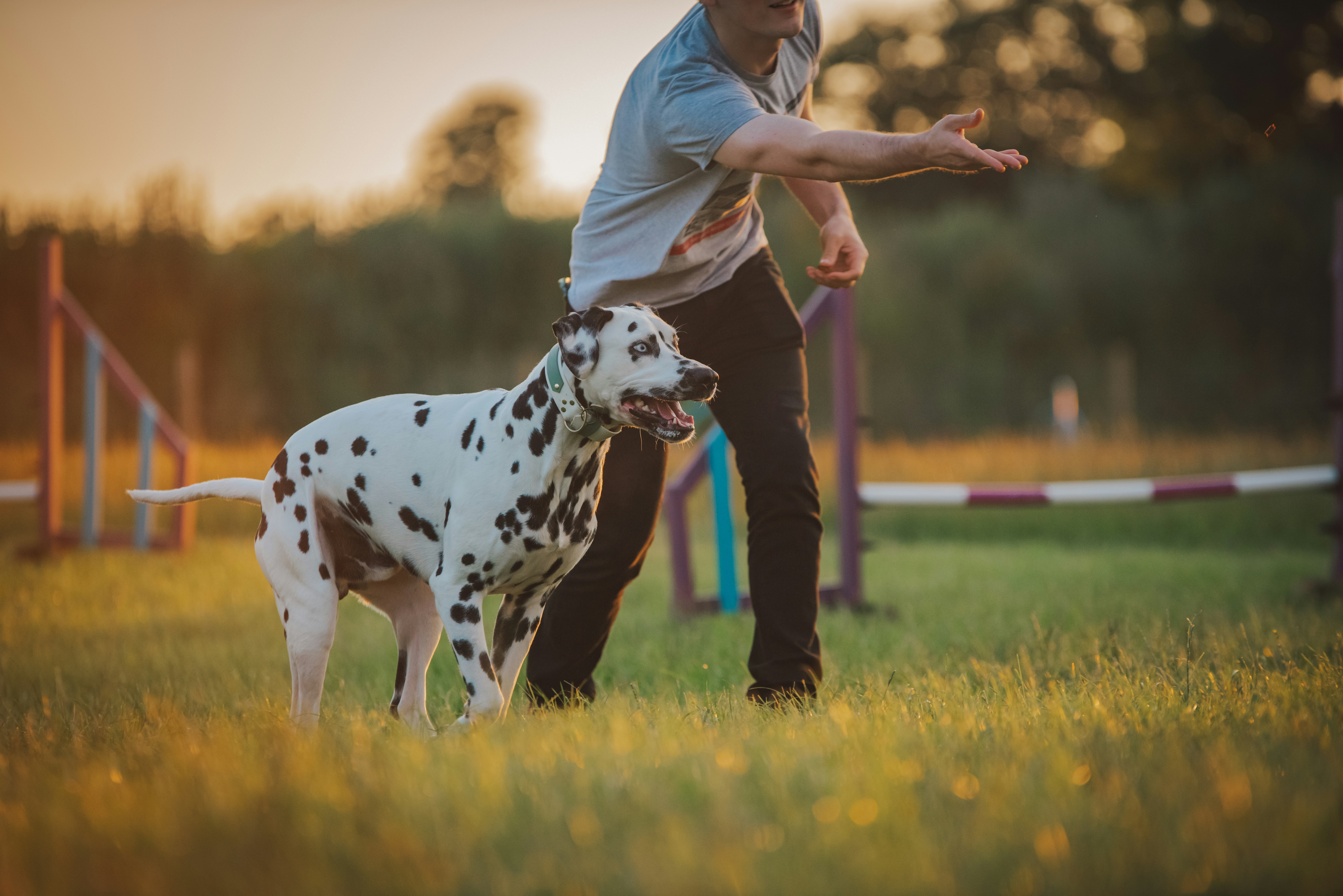
Understanding your dog’s instincts makes training smoother. A hound that ignores “come” might just be following its nose — so add scent games to make recall fun. A herding dog that chases cars can redirect that drive into agility or frisbee. Channel the stubbornness into purpose.
6. Keep Training Sessions Engaging
Stubborn dogs get bored fast. Keep sessions under ten minutes and include variety:
- 🎯 Alternate commands with tricks to keep it playful.
- 🚶 Change locations — living room, park, backyard.
- 🎵 Add upbeat energy; your enthusiasm matters as much as the reward.
End on a success, even a small one, so your dog leaves proud and motivated.
7. Break Tasks Into Tiny Steps
Complex behaviors can feel overwhelming for strong-willed dogs. Break each skill into bite-sized steps. For example, instead of practicing “stay” for 30 seconds, start with 2 seconds. Reward progress often — small wins create momentum.
8. Use Choices, Not Force
Dogs love autonomy. Offering limited choices builds cooperation without conflict. Instead of dragging them into a sit, lure gently with a treat or hand signal. Give your dog small decisions — like which toy to use or which direction to walk. Choice builds confidence, and confidence builds compliance.
9. Manage Frustration — Yours and Theirs
Strong-willed dogs can test your patience, but frustration from either side shuts learning down. When things go sideways:
- 🧘 Take a breath and pause training for a few minutes.
- 🌳 Step outside or switch to a simpler command your dog already knows.
- 🎉 Celebrate small victories — success builds trust and energy.
10. Stay Consistent — The Ultimate Key
Consistency is your strongest tool. If you allow jumping one day and scold it the next, your dog won’t know which rule applies. Use the same cues, same tone, and same expectations every time. Strong-willed dogs test boundaries — not to defy you, but to confirm where they stand.
11. When to Ask for Help
If you’re feeling stuck, reach out to a certified positive-reinforcement trainer or behaviorist. They can assess triggers, reframe your approach, and set you and your pup up for calm success. Some dogs simply need professional structure to unlearn stubborn habits safely.
Conclusion
Strong-willed dogs aren’t difficult — they’re determined. And that determination, when guided gently, creates focus, resilience, and deep loyalty. Approach training as teamwork, not a battle of wills. With empathy, clarity, and consistency, your “stubborn” pup will soon become your most thoughtful, cooperative companion — one choice at a time. 🐾💪