
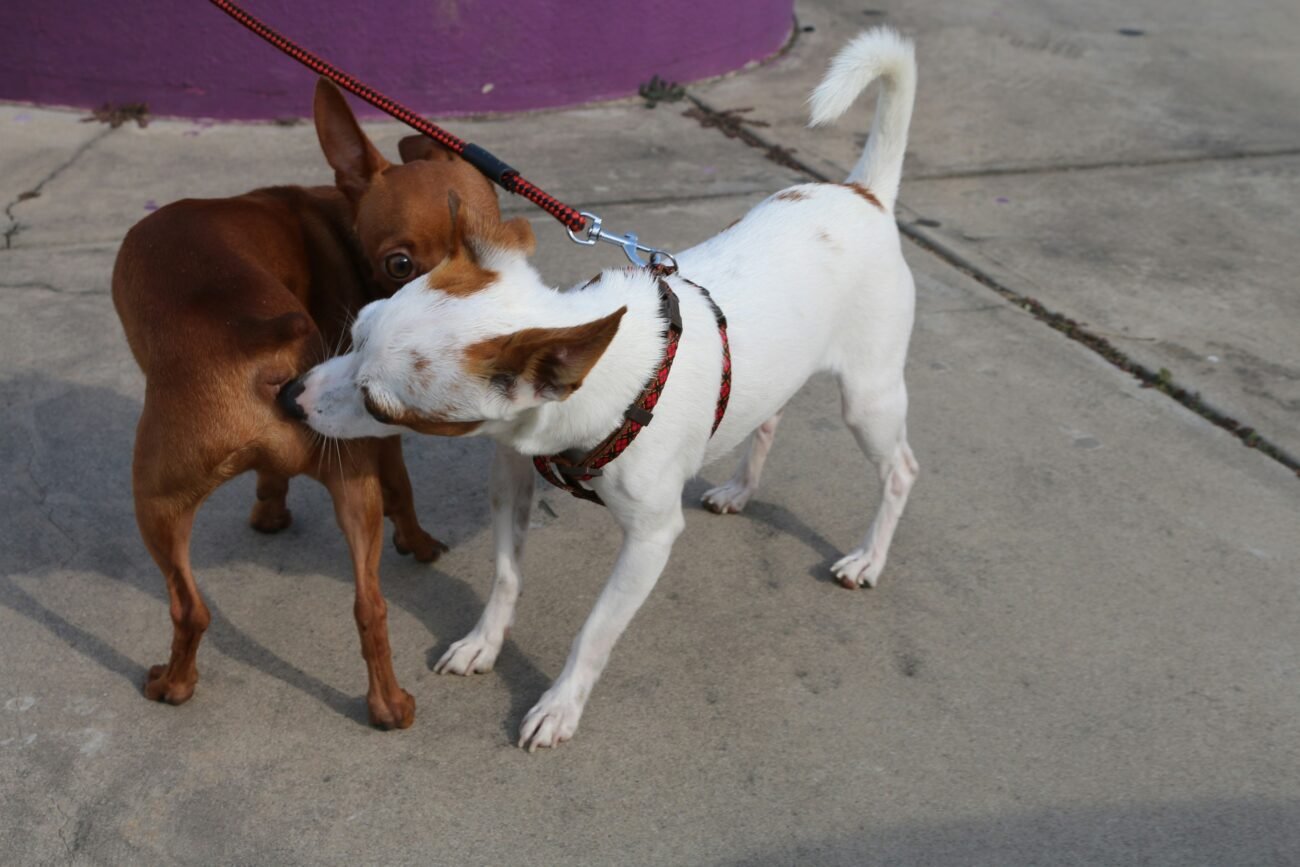
As any dog owner knows, canine greetings look very different from our own. Instead of shaking hands or hugging, dogs often dive nose-first under another dog’s tail. While this behavior may seem awkward to humans, it’s a completely normal and information-rich ritual for dogs. Understanding why dogs sniff each other’s rear ends can help us feel more comfortable during introductions and support healthy canine social interactions.
Their world is built on scent
Humans rely heavily on sight and language, but dogs experience the world primarily through their noses. With tens of millions more scent receptors than humans and a brain specialized for smell analysis, dogs can detect incredibly subtle chemical cues. A simple sniff provides detailed information that would take words for us to explain.
Dogs also have a specialized scent-detecting structure called the vomeronasal organ, or Jacobson’s organ, located in the roof of the mouth. This organ helps process pheromones—chemical signals that convey emotional state, reproductive status, and other biological information. When dogs sniff each other’s rear ends, they are using both scent systems to gather data.
Anal glands act like business cards
The reason dogs focus on the hindquarters lies in the anal glands—two small sacs located on either side of the anus. These glands produce a strong-smelling secretion that is unique to each dog. This scent acts like a personal identification card, revealing information such as sex, age, health status, and reproductive condition.
The chemical makeup of anal gland secretions is influenced by hormones, diet, stress, and overall health. In the wild, this information helps dogs assess potential mates or avoid unhealthy individuals. In modern settings like dog parks, it helps determine whether another dog is friend, foe, or future playmate.
What information do dogs gather?
A quick sniff can tell a dog whether another dog is male or female, intact or neutered, young or old, relaxed or stressed. Dogs can even detect recent meals or illness. Emotional states also alter scent profiles, allowing dogs to “read” confidence, fear, or excitement in ways humans cannot.
Scent signals serve many purposes
- Identify individuals: Each dog has a unique scent signature.
- Assess reproductive status: Pheromones indicate fertility and mating readiness.
- Gauge health and diet: Illness or dietary changes affect scent.
- Understand emotional state: Stress and excitement alter odor profiles.
- Establish social dynamics: Sniffing order and duration can communicate confidence or submission.
A social handshake—canine style
For dogs, butt sniffing is the equivalent of a handshake. During greetings, dogs typically circle one another before exchanging sniffs. This mutual information exchange helps determine how the interaction will proceed. When both dogs are comfortable, sniffing is brief and followed by play or calm coexistence.
Lingering too long or blocking movement can be interpreted as rude or threatening. Dogs often communicate boundaries by turning away, stiffening, or walking off. Respecting these signals is key to preventing conflict.
How to manage greetings safely
Dog owners should allow natural sniffing while staying attentive to body language:
- Watch posture: Loose bodies and relaxed tails signal comfort.
- Keep leashes loose: Tension can increase anxiety.
- Allow choice: Let dogs disengage if they want.
- Interrupt calmly if needed: Redirect with treats or cheerful recall.
- Advocate for your dog: End greetings if your dog seems stressed.
When sniffing becomes excessive
Some dogs fixate on sniffing due to anxiety, excitement, or poor social skills. Teaching cues like “leave it” and practicing recall can help manage overstimulation. Reward calm behavior and disengagement.
Dogs that react negatively to being sniffed may need gradual exposure with well-mannered companions. Controlled, positive experiences build confidence over time.
Respecting boundaries and hygiene
While butt sniffing is normal between dogs, it’s less welcome when directed at humans. Calm redirection and basic obedience cues help manage this behavior without punishment.
Anal gland issues can sometimes cause excessive sniffing or foul odors. Scooting, licking, or strong smells may indicate impaction or infection and should be checked by a veterinarian.
Putting it all together
What looks strange to us is actually a sophisticated form of canine communication. Dogs sniff each other’s rear ends to gather detailed information about identity, health, emotions, and social intent. By understanding and respecting this natural behavior, we help our dogs navigate social situations safely and confidently—speaking their language instead of judging it.


