Introduction
With only a few hundred puppies registered worldwide each year, the Dandie Dinmont Terrier is one of the rarest and most distinctive members of the terrier family. Their long, low bodies, silky topknots, and soulful eyes instantly set them apart. Originally bred to work the rugged borderlands of England and Scotland, Dandies earned a reputation as fearless hunters of otters, badgers, and vermin. Today, they are beloved companions known for their bold spirit, gentle affection, and quirky sense of humor.
Despite their rarity, Dandies have a surprisingly rich and colorful history — one intertwined with literature, farmers, gypsies, and even royalty. Though small, they are sturdy and charming dogs, weighing 18–24 pounds and standing 8–11 inches at the shoulder. This guide explores the breed’s origins, appearance, temperament, care needs, and whether the delightful Dandie Dinmont might be the right addition to your family.
History and Origins
The Dandie Dinmont Terrier developed in the 17th and 18th centuries in the border country between Scotland and England. Farmers and traveling gypsies relied on low, agile dogs capable of hunting otters, badgers, and rodents along farms and riverbanks. These tough terriers became known for two coat colors — pepper and mustard — which helped distinguish them from other working breeds.
The Literary Connection
The breed’s name traces back to Sir Walter Scott’s 1814 novel Guy Mannering, which featured a farmer named Dandie Dinmont and his pack of fearless terriers. The character was inspired by real-life farmer and breeder James Davidson. Readers quickly fell in love with the dogs in the story, and the nickname caught on.
By the mid-19th century, the Dandie Dinmont Terrier was officially recognized, championed by influential owners including Queen Victoria. The first breed club formed in 1875, and the American Kennel Club followed with recognition in 1886. Post-war declines and low breeding numbers now place the Dandie on the UK Kennel Club’s “Vulnerable Native Breeds” list, making responsible preservation more important than ever.
Physical Characteristics
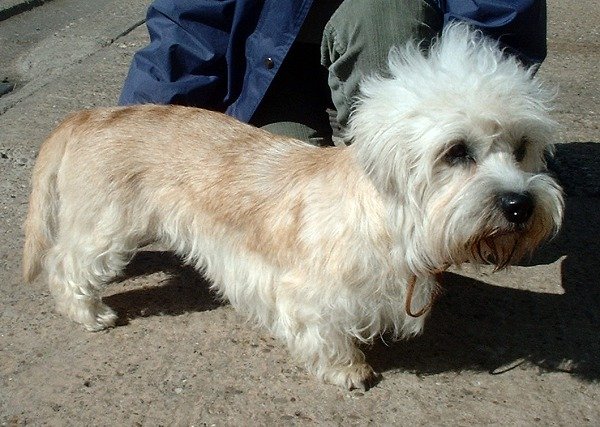
The Dandie Dinmont’s silhouette is unmistakable: a long, low body with a gentle rise over the loin, deep chest, and strong bone. Though short-legged, they are surprisingly agile and sturdy.
A few defining features:
- Topknot: A soft, silky puff of hair on the head, contrasting with the crisp body coat.
- Coat: A mix of hard and soft hair, about 2 inches long, in either pepper (blue-grey to silver) or mustard (reddish-fawn to pale cream).
- Eyes: Large, round, dark eyes that give a gentle, intelligent expression.
- Ears: Low-set, pendulous ears with darker feathering.
- Tail: Thick at the base, tapering to a curved but never curled tip.
Overall, the breed carries a dignified expression paired with a sturdy, compact frame.
Temperament and Personality
Small but mighty, the Dandie Dinmont Terrier has a distinct personality that blends terrier grit with gentle charm. Historically bred to tackle tough quarry, they still possess a strong prey drive and love to explore. They are curious, confident, and often comically expressive.
At home, Dandies are deeply loyal and affectionate. They form close bonds with their families and often enjoy curling up beside their favorite person. Well-socialized Dandies are typically good with children, though supervision is wise due to their small size. They may be reserved with strangers but are rarely aggressive, making them steady watchdogs.
These terriers adapt well to apartments or houses so long as they receive daily enrichment. Puzzle toys, scent games, and short walks help prevent boredom. Their balanced disposition makes them ideal companions for people who appreciate a dog with both whimsy and heart.
Care and Grooming
Dandie Dinmont Terriers require regular grooming to keep their coat healthy and maintain the breed’s signature look.
- Brushing: Once or twice weekly to prevent mats, especially around the ears, belly, and legs.
- Hand-stripping: Every few months to preserve coat texture. Clipping can soften the coat.
- Bathing: Every 4–8 weeks using gentle shampoo.
- Dental care: Daily brushing plus professional cleanings due to small-breed dental risks.
- Nail care: Trim every 2–3 weeks.
- Ears: Check weekly for wax or infection.
Exercise needs are moderate. Two short walks plus playtime are usually enough. Because of their long backs, Dandies should avoid jumping from furniture; ramps or stairs can help protect their spine.
Health Considerations
The Dandie Dinmont Terrier is generally healthy but has several breed-specific concerns:
- Intervertebral disc disease (IVDD): Linked to their long backs. Avoid high-impact activities and maintain a healthy weight.
- Eye conditions: Including glaucoma, cataracts, and corneal dystrophy. Annual eye exams are recommended.
- Hypothyroidism: Can cause weight gain or lethargy; manageable with medication.
A balanced diet, routine vet visits, and maintaining a lean physique all contribute to long-term health.
Training and Exercise Needs
Dandies are smart, spirited, and willing to learn—when training is fun. Positive reinforcement works best, while harsh methods may cause them to shut down.
Training tips:
- Keep sessions short and varied to avoid boredom.
- Prioritize recall training, especially due to their strong prey drive.
- Incorporate scent work, trick training, or agility for mental stimulation.
- Use treats, toys, and praise to keep them motivated.
Socialization and Obedience
Early socialization helps ensure that a Dandie grows into a confident, well-mannered adult. Puppy classes provide safe opportunities to meet other dogs and people.
- Introduce gradually: New sights, sounds, and environments build confidence.
- Teach impulse control: Behaviors like waiting at doors and settling on a mat ease daily life.
- Reward calm behavior: Helps prevent territorial barking or wariness.
Is a Dandie Dinmont Terrier Right for You?
Because the breed is rare, finding a puppy often requires patience and working with a reputable breeder committed to health and preservation. This breed is ideal for owners who appreciate terrier spirit wrapped in a gentle, affectionate package.
Dandies can thrive in apartments or homes, with families or singles, as long as they receive daily attention, training, and mental stimulation. If you’re drawn to a unique breed with centuries of history, unmistakable charm, and unwavering loyalty, the Dandie Dinmont Terrier may be the perfect companion.