Why Upcycled Dog Toys Make Sense
Toys keep dogs happy, mentally stimulated, and far less likely to chew on your belongings. Unfortunately, many commercial dog toys are made from synthetic materials that don’t last and quickly end up in landfills. If you’ve ever watched your dog destroy an expensive plush toy in minutes, you know how frustrating—and wasteful—that can feel.
Upcycling offers a smart alternative. By repurposing everyday household items, you can create engaging dog toys that are affordable, sustainable, and tailored to your dog’s play style. Old clothing, towels, and common household items can be transformed into toys that satisfy your dog’s natural instincts to tug, sniff, shred, and problem-solve. As a bonus, making your own toys is fun and gives worn-out items a second life.
DIY Tug Toys: Turn Old Fabrics Into New Fun
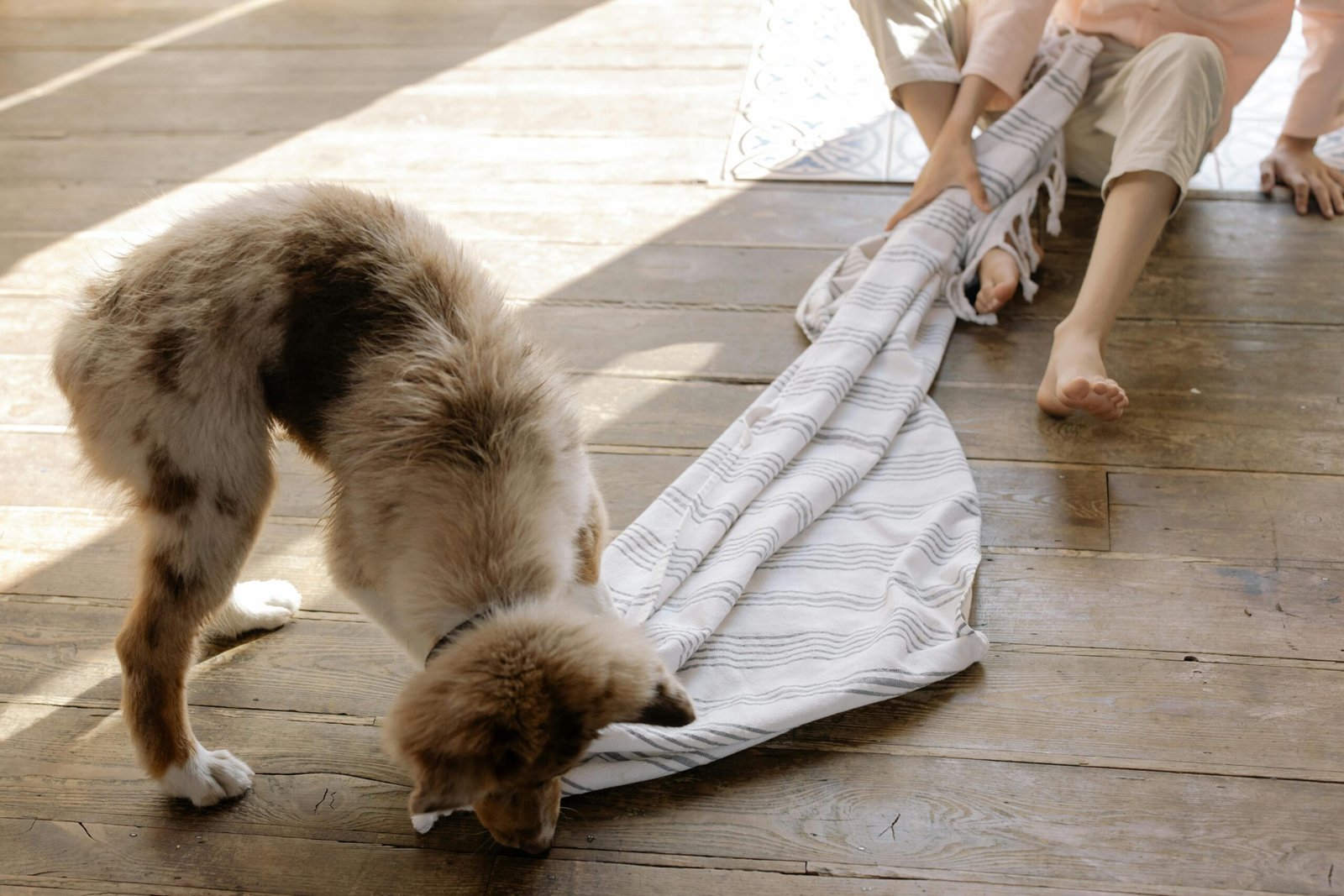
One of the easiest upcycled dog toys to make is a braided tug rope. Old T-shirts, sweatpants, flannel pajamas, or fleece blankets work especially well. Natural fibers like cotton or wool are safest, as synthetic fabrics can unravel into long strings that pose choking hazards.
Materials and Safety Tips
- Fabric strips: Cut three or more long strips, 5–10 cm wide and at least twice the length of the finished toy.
- Scissors: Sharp fabric scissors help prevent fraying.
- Optional add-ons: Knots, tennis balls, or squeakers can add variety—just ensure they’re too large to swallow.
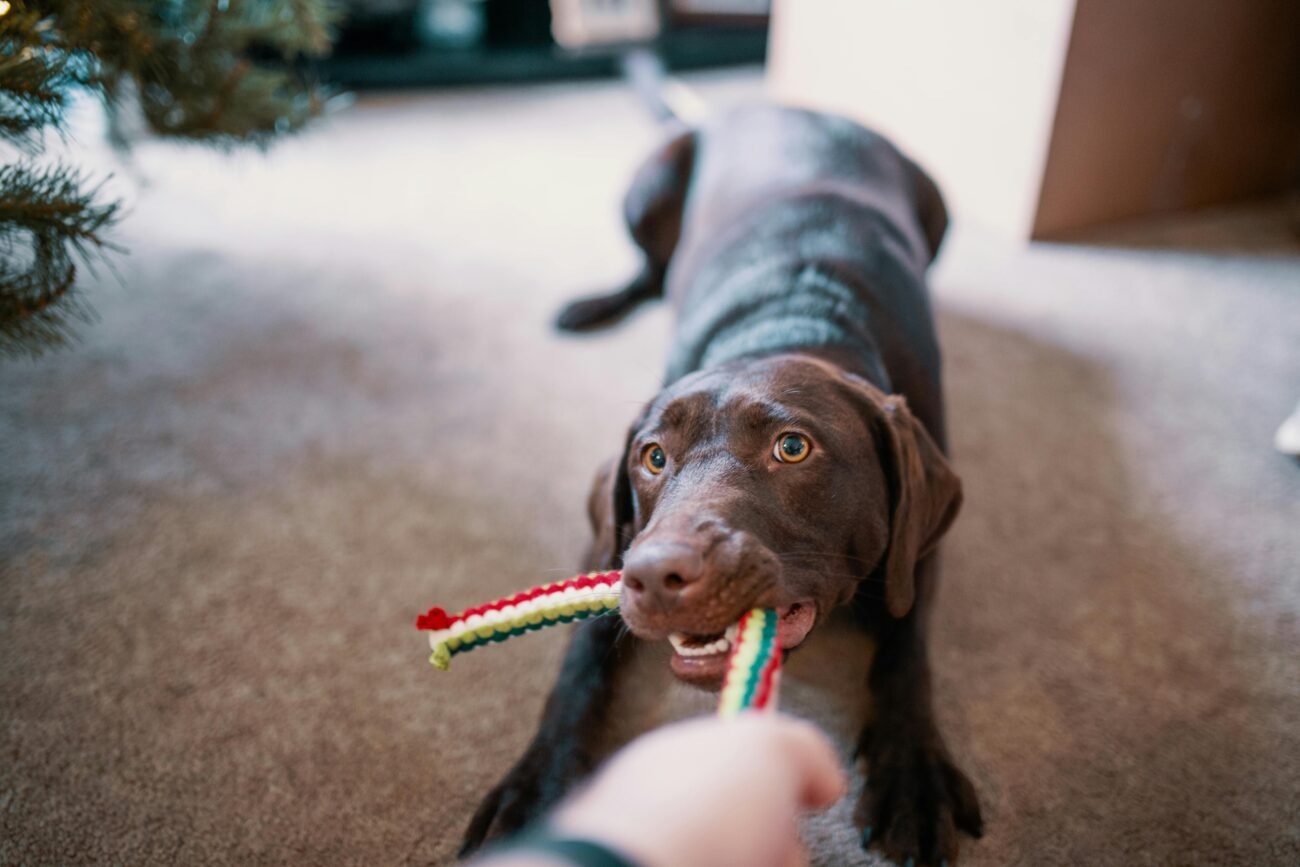
Tie the strips together at one end with a tight knot and braid them snugly so the rope stays firm. Knot the opposite end and trim excess fabric. For thicker ropes, use additional strips or braid two ropes together. Always supervise tug games and discard the toy if it begins to shred.
Make a Hide-A-Treat Mat From Household Items
Snuffle mats encourage dogs to use their noses to forage for food, tapping into their natural instincts. Instead of buying an expensive version, you can make your own using upcycled materials.
Choose a sturdy base such as a rubber dish mat with holes, a plastic grass mat, or flexible plastic mesh. Avoid metal or brittle plastics that could crack or cause injury.
Step-by-Step Instructions
- Cut fabric strips: Use old towels, fleece, or T-shirts. Cut strips about 3–4 cm wide and 15–20 cm long.
- Attach to the base: Thread each strip through a hole and secure it with a tight double knot.
- Cover the surface: Continue tying strips until the mat forms a thick, shaggy surface.
- Mix textures and colors: This adds interest while remaining washable and dog-safe.
Scatter kibble or treats between the fabric “grass” and let your dog sniff them out. You can also tie the mat around a PVC pipe to create a portable enrichment toy.
Puzzle Toys Using Kitchen Tools
Puzzle toys challenge dogs mentally and are perfect for rainy days, crate time, or slowing down fast eaters.
A simple beginner puzzle uses a muffin tin and tennis balls. Place treats in each cup, cover them with tennis balls, and let your dog figure out how to uncover the rewards.
For more advanced puzzles, cut small holes in empty plastic bottles or milk jugs, smooth the edges, add kibble, and let your dog roll the container. PVC treat tubes with drilled holes also work well. Always supervise play and use sturdy materials.
Repurpose Everyday Items Into Chew and Fetch Toys
- Sock balls: Stuff a clean sock with a tennis ball and knot the end.
- Water bottle crunchers: Slide an empty bottle into a sock and tie off both ends.
- Denim chews: Roll old jeans tightly and knot the ends. Freeze after soaking in broth for hot days.
- Cardboard puzzles: Nest paper tubes or boxes with treats for supervised shredding fun.
Safety Considerations
- Choose the right size: Toys should be too large to swallow.
- Inspect regularly: Discard toys that fray, crack, or unravel.
- Avoid toxic materials: Skip chemically treated fabrics or containers that held chemicals.
- Supervise play: Especially when introducing a new toy.
The Benefits of Upcycled Toys
DIY dog toys save money, reduce waste, and provide meaningful mental stimulation. Snuffle mats and puzzle toys encourage problem-solving, while tug toys strengthen your bond through interactive play. Mentally engaged dogs are less likely to develop destructive behaviors, boredom, or anxiety.
Getting Creative With DIY Dog Toys
Once you start upcycling, the ideas multiply. Create floating toys with corks, add treat pockets for advanced sniffing games, or make seasonal toys with holiday-colored fabrics. The best toys are the ones tailored to your dog’s preferences.
Conclusion
Upcycled dog toys offer a sustainable, affordable, and highly customizable alternative to store-bought options. With a little creativity, you can transform everyday household items into enriching toys that keep your dog happy, stimulated, and engaged—while reducing waste and saving money.