Introduction
For many city dwellers, a balcony or small terrace is the only access to fresh air and sunshine without leaving the building. If you share your home with a dog, this compact outdoor space can become a valuable extension of your living area and a place for your pup to relax, sniff the breeze, and watch the world go by.
Transforming a balcony into a dog-friendly oasis requires thoughtful planning to ensure it is safe, comfortable, and stimulating. Because balconies are elevated and exposed to the elements, they present unique challenges compared with ground-level yards. This guide walks through the key safety, comfort, and enrichment ideas to help you turn any balcony or small patio into a safe, fun haven for your canine companion.
Prioritize Safety
Safety should always be the first consideration when allowing your dog onto a balcony. Because of their curiosity and prey drive, dogs may try to squeeze through railings or jump to chase birds or squirrels, so it’s important to eliminate fall risks and other hazards.
Secure Railings and Barriers
- Inspect railings for gaps that a dog could slip through or get stuck in.
- If gaps are wider than your dog’s head, add barriers such as plexiglass, mesh panels, balcony safety netting, or bamboo fencing.
- Ensure any material you use is sturdy, chew-resistant, and firmly attached so it can’t be pushed aside.
- Cover open bottoms or vertical balusters with lattice or hardware cloth and secure them well.
- Check building regulations or landlord guidelines before making permanent modifications.
Supervision and Training
Even with barriers in place, dogs should not be left unsupervised on a balcony. A determined dog can still climb, chew, or panic if startled by noises like fireworks or sirens.
- Stay nearby whenever your dog is on the balcony so you can intervene quickly.
- Teach basic cues such as “stay”, “leave it”, and “come” to redirect risky behavior.
- Reward calm, relaxed behavior so your dog learns the balcony is a place to chill, not to zoom or jump.
Comfortable and Durable Flooring
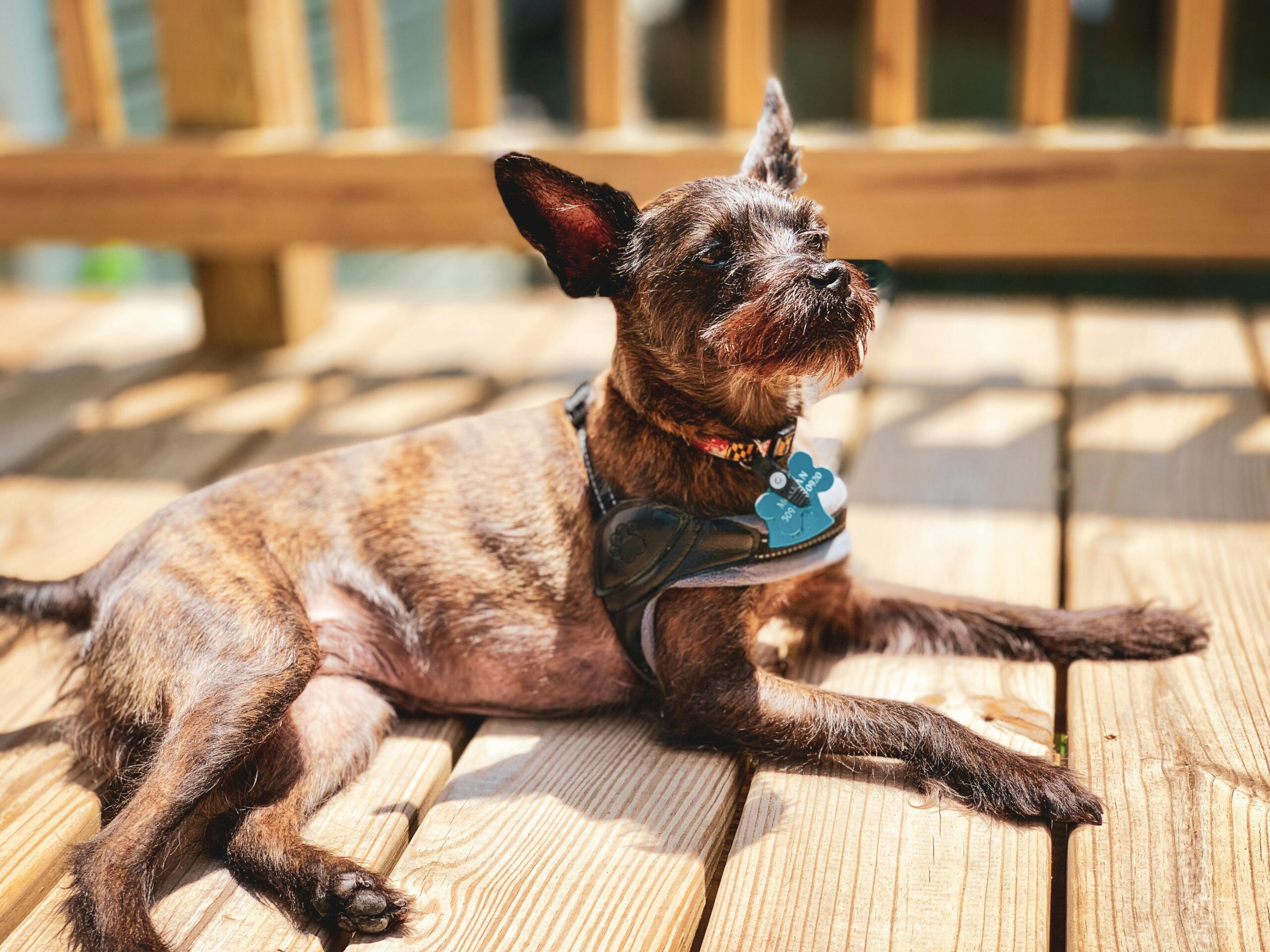
Concrete, metal, or wooden balcony floors can be hot in summer, cold in winter, and slippery when wet. Choosing the right flooring makes the space more inviting and protects your dog’s paws.
- Use interlocking deck tiles (wood or composite) for better traction and a more comfortable surface.
- Add outdoor rugs or artificial grass mats for softness. Secure them so they don’t slide and clean regularly.
- For a more natural feel, consider small sod mats or low planters with grass—just be prepared for extra maintenance.
- Regularly check for splinters, sharp edges, or loose boards and avoid materials with strong chemical coatings.
Provide Shade and Weather Protection
Balconies get a lot of direct sun and wind, which can quickly become uncomfortable or unsafe for dogs. Ensure your dog always has a sheltered, comfortable spot.
- Create shade with a cantilever umbrella, sun sail, pergola, or tall potted plants.
- Consider a pop-up pet canopy or crate cover to give your dog a den-like retreat.
- Use outdoor curtains or clear windbreak panels to reduce strong gusts.
- A waterproof canopy or awning can keep at least part of the balcony dry during light rain.
- Provide a warm, insulated bed or blanket during colder months and bring your dog inside during extreme heat, cold, or storms.
Incorporate Dog-Safe Plants
Plants can turn your balcony into a small green retreat and offer sensory enrichment for your dog, but many common plants are toxic. Choose dog-safe options and avoid known toxic varieties such as lilies, sago palm, philodendron, aloe, and ivy.
Dog-friendly options include:
- Herbs: rosemary, basil, thyme, parsley.
- Edible grasses: cat grass mixes and wheatgrass.
- Non-toxic flowers: marigolds, snapdragons.
- Small fruiting plants: strawberries and blueberries (in moderation as treats).
Use sturdy containers that won’t tip easily and place hanging baskets out of reach. Always verify plant safety through a reliable pet resource before adding it to your balcony.
Enrichment and Entertainment
To encourage your dog to spend time on the balcony, make it a place where good things happen. Think comfort, views, and things to do.
- Provide a cozy outdoor dog bed, mat, or cushion, ideally in a shaded corner with a good view.
- Offer chew toys, treat-dispensing puzzles, or snuffle mats to keep them engaged.
- Keep a fresh water bowl or pet fountain available, especially in warmer weather.
- Add a low platform or ramp you’re comfortable with so your dog can perch and watch the world go by.
- Rotate toys periodically so the space feels fresh and interesting.
Teach Your Dog to Use the Balcony
Some dogs take to the balcony right away, while others may be unsure. Introduce the space gradually and make it a positive experience.
- Step outside together and reward calm behavior with treats and praise.
- Scatter a few treats or place a favorite toy on the balcony to encourage gentle exploration.
- Keep early sessions short and end while your dog is still relaxed.
- Use a cue like “balcony time” or “outside” so your dog associates the phrase with this specific space.
- If your dog becomes anxious or barks constantly, bring them inside, reset, and try shorter, calmer sessions next time.
Seasonal Adjustments
Summer
- Provide plenty of cool, fresh water at all times.
- Check surface temperatures with the back of your hand; if it’s too hot for you, it’s too hot for paws.
- Add a cooling mat or shallow splash pan for your dog to lie or stand in.
- Avoid midday sun and limit balcony time during heat waves.
- Consider pet-safe sunscreen on thin-fur or light-skinned areas like ears and nose (with your vet’s guidance).
Winter
- Lay down insulated mats or outdoor carpets to protect paws from icy or cold surfaces.
- Use a dog sweater or coat for short-haired or small breeds.
- Clear snow or ice quickly and dry your dog’s paws after outdoor time.
- Limit time outside during freezing temperatures and always provide a warm indoor retreat.
Conclusion
A balcony doesn’t have to be off-limits to your dog. With secure barriers, comfortable flooring, shade, dog-safe plants, and engaging enrichment, you can transform even a small outdoor space into a safe and relaxing retreat.
By supervising your dog, adjusting the setup for seasonal weather, and consistently rewarding calm behavior, your balcony can become a favorite hangout for both of you. Whether you’re sipping coffee on a sunny morning or unwinding together at sunset, a well-designed dog-friendly balcony can enhance urban living and deepen the bond you share with your canine companion.