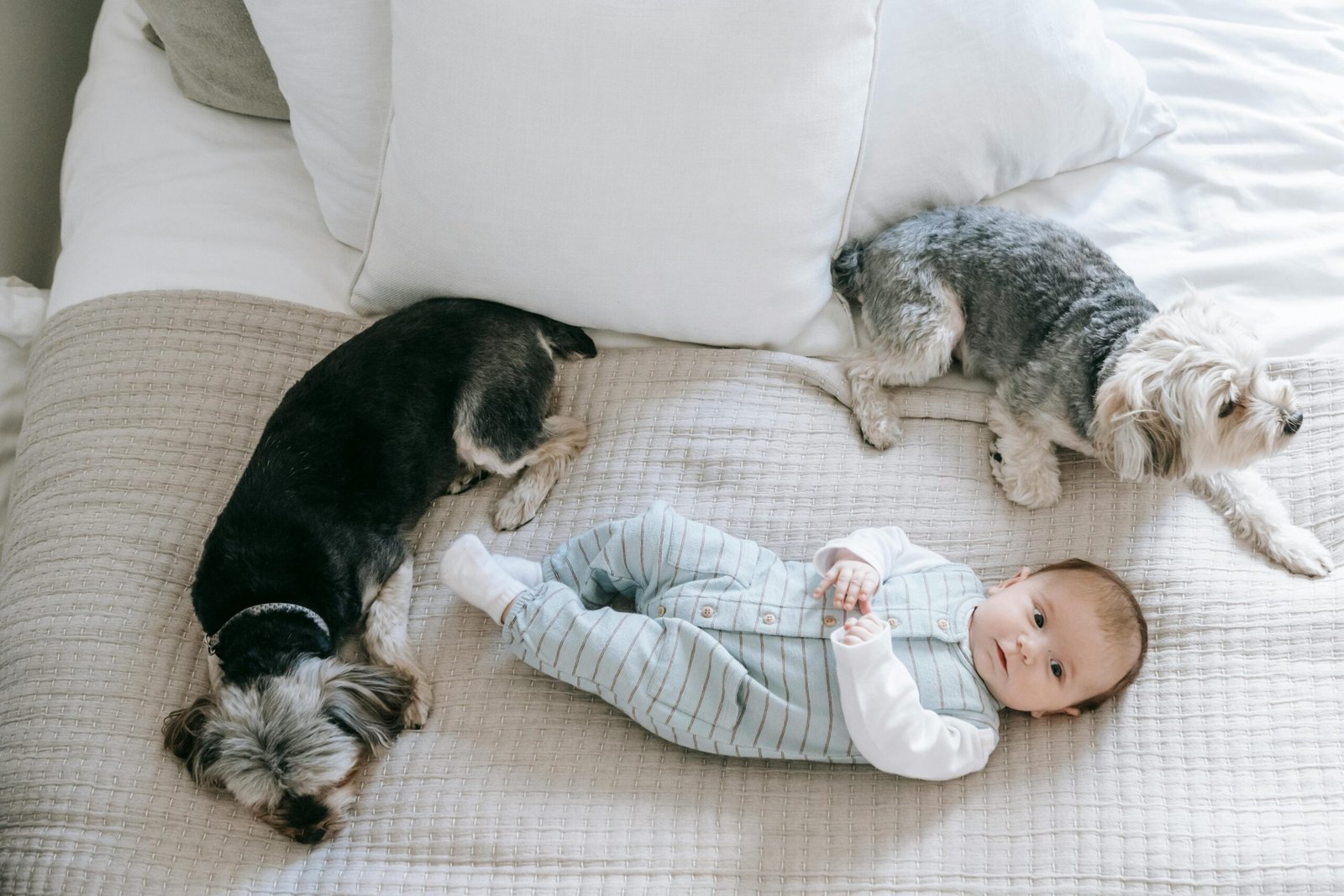
Welcoming a new baby into your home is an unforgettable moment — joyful, emotional, and life-changing. But while the excitement is obvious for humans, your dog experiences this transition very differently. New scents, unusual noises, shifting routines, and a sudden drop in attention can leave even the most easygoing dog feeling unsure or anxious. Fortunately, with thoughtful preparation and gradual adjustments, your dog and your baby can build a safe, loving relationship rooted in trust and comfort. A smooth introduction begins well before the baby arrives and continues with patient, structured steps in the months that follow.
1. Prepare During Pregnancy
Pregnancy is the perfect time to start laying the foundation for harmony between your dog and baby. Dogs are remarkably perceptive — they pick up on your changing scent, fluctuating energy, and even shifting emotions. Use this period to fine-tune your dog’s manners and create expectations that will make life easier once the baby comes home.
- Refresh basic obedience: Reinforce essential cues like sit, stay, leave it, and go to bed. These commands help you redirect your dog when you need space or focus.
- Practice calm behaviors: Reward your dog for settling on a mat, relaxing nearby, or waiting patiently — skills that become invaluable during feeding sessions or diaper changes.
- Introduce baby gear early: Set up cribs, swings, playpens, and strollers weeks in advance so your dog can adjust to new objects without the added stress of a newborn.
- Walk with the stroller: Take practice strolls with an empty stroller to reduce excitement or anxiety later.
2. Desensitize to Baby Sounds and Smells
Babies bring a world of sensory changes — crying, cooing, lotions, powders, blankets, diapers. Gradually introducing these sensations helps prevent overstimulation or fear once your baby is home.
- Play recordings of baby cries, babbling, or fussing at low volume during relaxed times. Praise your dog for staying calm.
- Gradually increase the volume over days or weeks as your dog becomes more comfortable.
- Apply baby lotion or powder to your own arms and hands, letting your dog investigate gently.
- Wrap a doll in baby blankets so your dog gets used to new scents and visual cues.
Why it matters: Slow exposure turns unfamiliar sensations into predictable, everyday experiences.
3. Gradually Adjust the Routine
Dogs thrive on routine, but newborns disrupt even the most organized household. Rather than allowing your dog’s routine to change abruptly, help them transition gradually.
- Shift walk times: If walks will happen earlier, later, or less frequently after the baby arrives, begin adjusting now.
- Modify feeding schedules: Dogs quickly adapt to new mealtimes when changes happen slowly.
- Introduce independent time: Practice short periods when your dog entertains themselves with a chew or puzzle toy so they’re not overwhelmed by reduced attention later.
- Simulate baby care: Hold a doll, rock in a chair, or practice gentle “shushing” while your dog remains calm nearby.
4. Coming Home: Set Up a Calm First Meeting
The first introduction is important, but it doesn’t need to be dramatic. Keeping the moment calm and controlled helps your dog connect the baby’s presence with positive feelings.
- Greet your dog first: After years of being your “baby,” your dog needs this reassurance before seeing the newborn.
- Use a leash initially: This doesn’t mean your dog is untrustworthy — it simply ensures you can manage excitement.
- Allow gentle curiosity: Let your dog sniff the baby’s blanket or socks first. A brief, calm look is enough for day one.
- Reward calm behavior: Lots of praise, petting, and treats reinforce that the baby’s presence is a good thing.
- Don’t force interaction: Some dogs rush forward; others hang back. Let their comfort level guide the pace.
5. Create Safe Zones for Both Dog and Baby
Every family member needs their own peaceful retreat. Setting up boundaries protects your baby while also giving your dog a sanctuary of their own.
- Use baby gates or playpens: These allow safe supervision without full separation.
- Create a dog-only space: A crate, cozy bed, or quiet room gives your dog a place to decompress.
- Designate baby-only zones: Nurseries or sleeping areas should be kept dog-free for hygiene and safety.
- Supervise, always: Even the most gentle dog should never be left alone with a baby.
- Keep rewarding good behavior: Calmness near the baby = treats and praise.
6. Encourage Positive Associations
One of the most effective strategies is pairing the baby’s presence with something your dog loves. This helps your dog see the baby not as competition, but as a signal for good things.
- Give your dog a special chew or toy only during feeding or soothing sessions.
- Offer treats whenever your dog calmly approaches or lies near the baby.
- Use soothing praise to reinforce gentle, curious behavior.
7. Ongoing Training After Baby Arrives
Training doesn’t stop with the introduction — it evolves as your baby grows and becomes more mobile.
- Teach boundaries: Cues like “back up,” “stay,” or “go to bed” are invaluable as babies begin crawling.
- Prevent resource guarding: Feed your dog in a quiet space and remove high-value chews during baby playtime.
- Introduce baby movement gradually: Crawling, toddling, and shrieks can startle dogs — keep early interactions slow and supervised.
8. Supporting Your Dog Emotionally
Dogs may feel confused, jealous, or insecure during the transition. Emotional support is just as important as structure.
- Maintain one-on-one time each day, even a short cuddle or 10-minute walk.
- Provide enrichment: puzzle toys, scent games, training sessions.
- Stay patient — your dog is adapting to a major life change too.
Conclusion
Introducing your dog to a new baby is a journey, not a single moment. With preparation, empathy, and consistent positive reinforcement, your dog can learn to feel secure and included in this new chapter. Many dogs grow to be incredibly gentle protectors and loyal friends to the little humans they grow up with. Give yourself grace, give your dog patience, and embrace the process — it can lead to a beautiful lifelong friendship between your baby and their furry companion.