Why Dogs Love Scent Work
Dogs experience the world primarily through their noses—far more intensely than humans do. Sniffing isn’t just a quirky habit; it’s a deeply satisfying mental workout that taps into their natural instincts. Scent work provides focus, enrichment, and a constructive way to burn energy, especially on days when outdoor time is limited. The AKC notes that structured scent games are one of the best ways to stimulate a dog mentally and help release pent-up energy during bad weather or busy weeks.
Getting Started: Simple Scent Games
You don’t need special tools or training to introduce scent work. Start with easy games that encourage your dog to use their nose and build confidence at their own pace. A few beginner-friendly ideas:
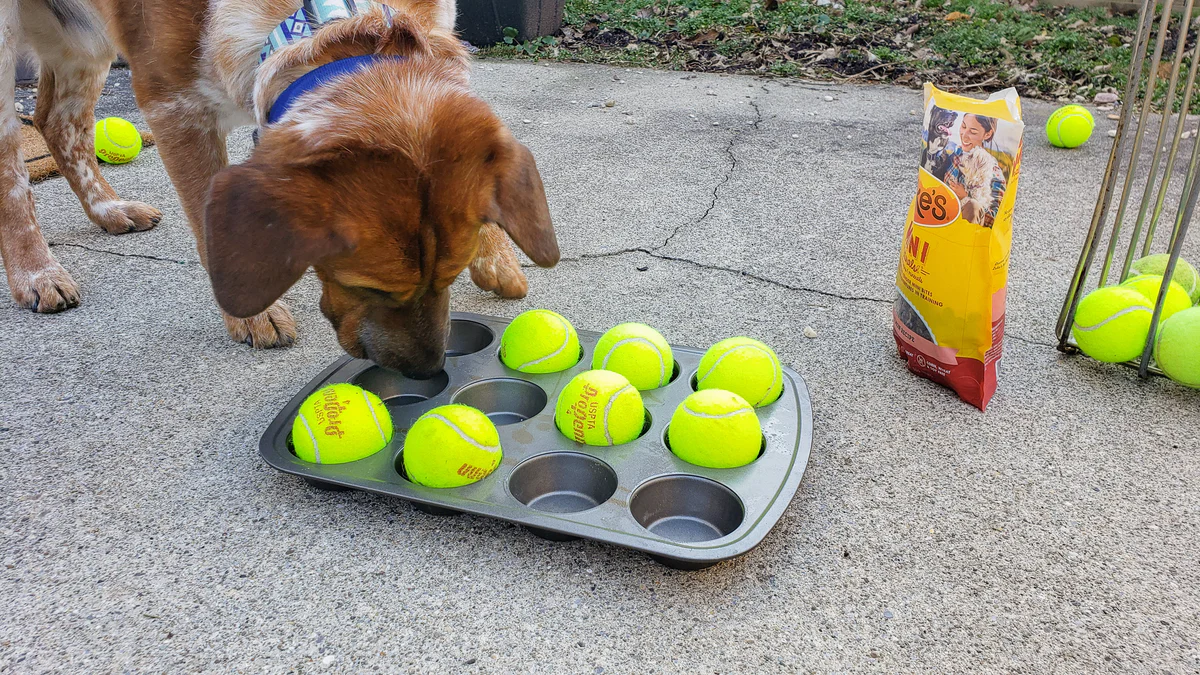
- Muffin Tin Puzzle: Place treats in a few cups of a muffin tin and cover them with tennis balls. Your dog must sniff out the treats and remove the balls to reach the reward—great for strengthening problem-solving skills.
- The Cup Game: Hide a treat under one of several cups. After a quick shuffle, encourage your dog to use scent rather than sight to choose the correct cup. Start with three cups and increase difficulty as they improve.
- Box Search: Scatter cardboard boxes or paper bags around a room and hide a treat in one. Add empty decoys to encourage deeper sniffing and build persistence.
Keep early sessions short—about 5 to 10 minutes—to prevent frustration. Use high-value treats and praise your dog enthusiastically when they succeed. Always supervise to ensure they don’t ingest cardboard, tape, or other materials.
Making It Harder: Introduce Scents and Search Skills
Once your dog understands simple sniff-and-find games, you can add more structure by introducing specific scents. Many nosework hobbyists start with diluted essential oils such as birch or clove, pairing the odor with a treat to establish value. Gradually, your dog learns to search for the scent alone.
Other ways to increase difficulty:
- Hide treats in harder-to-reach or partially concealed areas—behind objects, under furniture, or inside containers.
- Move searches outdoors into a safe yard or garage where airflow and natural smells add complexity.
- Use a variety of search objects such as cones, flower pots, crates, or buckets.
- Place scents or treats at different heights, encouraging your dog to follow a scent trail upward.
As difficulty increases, resist the urge to point or guide your dog—they learn more by solving the puzzle independently. Offer a cheerful cue such as “find it!” and let them work.
Advanced Nosework: Organized Sports and Scent Detection
For dogs who thrive on scent work, formal sports like AKC Scent Work and NACSW trials offer structured challenges. Dogs learn to identify specific odors in a series of hides and alert their handler when they find the source. Training for competition can be a rewarding hobby even if you never enter a trial.
If organized sports aren’t your style, scent work can still be integrated into daily life:
- Teach your dog to find your keys or a favorite toy.
- Hide safe chew treats in the yard for outdoor scavenger hunts.
- Offer complex indoor searches on rainy days or during bad weather.
Working breeds such as Beagles, Labradors, and German Shepherds especially benefit from activities that channel their natural hunting instincts.
Training Tips and Safety Considerations
Scent work should be enjoyable, confidence-building, and safe. Keep these guidelines in mind:
- Use high-value rewards: Tiny bits of smelly treats maintain motivation without overfeeding.
- Increase difficulty gradually: If your dog struggles, simplify the task to rebuild success.
- Let your dog take the lead: Avoid pointing or hovering; allow natural problem-solving.
- Short, frequent sessions: End on a high note before your dog becomes tired or frustrated.
- Prioritize safety: Remove staples, tape, or other hazards from boxes and ensure essential oils are properly diluted and used in ventilated spaces.
Conclusion
Scent work taps into one of your dog’s most powerful instincts and provides rich mental enrichment with minimal equipment. Whether you stick to simple indoor games or explore advanced nosework sports, you’ll see your dog’s confidence and focus improve as they develop their searching skills. Because sniffing is natural and self-rewarding, scent work suits all ages and breeds—from energetic puppies to seniors who need gentle stimulation.
Incorporating regular nose work sessions into your dog’s weekly routine can improve behavior, sharpen training focus, and provide a calming outlet for anxious or reactive dogs. By turning scenting into a fun, rewarding game, you’ll build a deeper bond and give your dog a meaningful, instinct-satisfying hobby they’ll look forward to every time you say, “Find it!”